
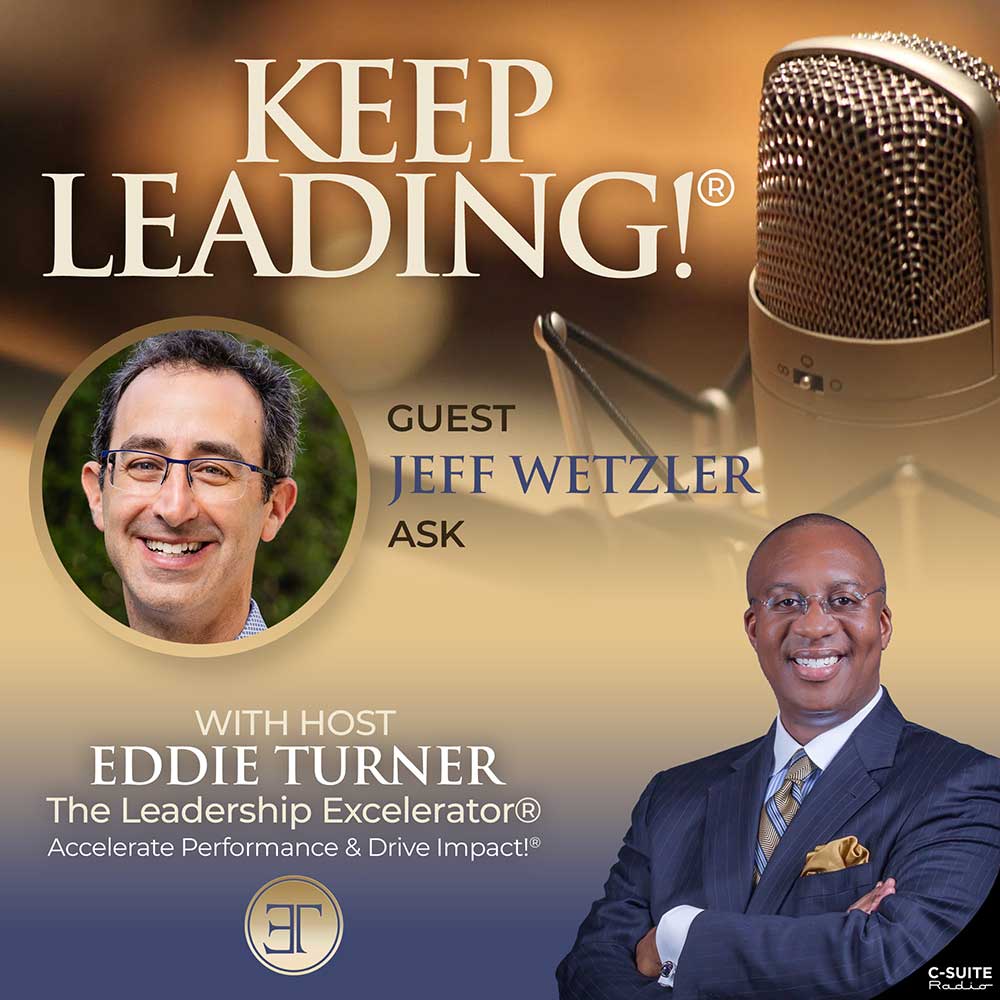
Jeff Wetzler
Human Potential & Learning Expert | Former Chief Learning Officer at Teach for America | Keynote & TEDx Speaker | Author of “Ask: Tap Into the Hidden Wisdom of People Around You.”
Ask
Episode Summary
Join Eddie Turner on the Keep Leading!® podcast as he interviews Jeff Wetzler, co-founder of Transcend, former international business consultant, and Teach for America executive.
Discover the transformative power of The Ask Approach™, a method Jeff reveals in his book Ask. This method emphasizes understanding what others genuinely think, know, and feel.
Learn how to:
- Awaken curiosity
- Pose quality questions
- Listen to Learn
- Make it safe for others to share
- Turn conversations into actionable insights
In a world rapidly evolving with AI, mastering these uniquely human skills to connect and learn from others has become more crucial than ever. Don’t miss this enlightening episode!
Keep Leading!® Live
About Jeff Wetzler
Dr. Jeff Wetzler is an author, entrepreneur, and highly sought-after keynote speaker. His book, “Ask: Tap Into the Hidden Wisdom of People Around You,” was an Amazon Editor’s Pick for Best Books of 2024, a Next Big Idea Club Top Leadership Book of 2024, and a “Must Read.” It quickly became a #1 new release in multiple categories.
Dr. Wetzler’s work is consistently showcased in publications ranging from Harvard Business Review and Fast Company to Forbes, Entrepreneur, and Psychology Today. He has provided guidance to business, NGO, and government leaders globally. He has delivered speeches at major corporations such as Microsoft, Google, Nestlé, and DaVita, as well as at startups and prominent nonprofits.
Blending a unique set of leadership experiences in business and education, Wetzler has served as a management consultant to some of the world’s top corporations, as a learning facilitator for leaders globally, as Chief Learning Officer at Teach For America, and most recently, as co-founder and co-CEO of Transcend, a nationally recognized and fast-growing innovation organization.
Jeff Wetzler earned a Doctorate in Adult Learning and Leadership from Columbia University and a Bachelor’s in Psychology from Brown University. He is an Aspen Global Leadership Network member and an Edmund Hillary Fellow.
Website
https://www.askapproach.com
LinkedIn
https://www.linkedin.com/in/jeff-wetzler-9ba3824/
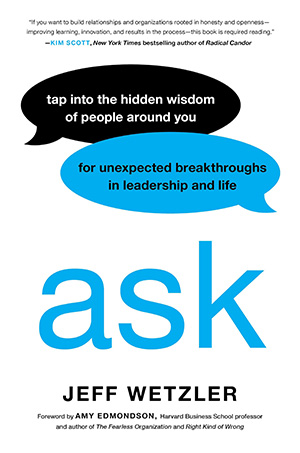
Jeff’s Book
Leadership Quote
“Anyone who isn’t embarrassed by who they were last year probably isn’t learning enough.”
― Alain de Botton
Subscribe, share, and review on Apple Podcasts!
https://bit.ly/4kPBcZo
Subscribe, share, and review on Spotify
https://spoti.fi/4iOFzlB
Full Episode Transcripts and Detailed Guest Information
www.KeepLeadingPodcast.com
Keep Leading LIVE (Live Recordings of the Keep Leading!® Podcast)
www.KeepLeadingLive.com
Connect with Eddie Turner
Website: https://www.eddieturnerllc.com
LinkedIn: https://www.linkedin.com/in/eddieturner
Twitter: https://twitter.com/eddieturnerjr
Facebook: https://www.facebook.com/eddieturnerllc
Instagram: https://www.instagram.com/eddieturnerjr/
YouTube: http://www.youtube.com/EddieTurnerJr
LinkedIn Business: https://www.linkedin.com/company/eddie-turner-llc
TikTok: https://www.tiktok.com/@eddieturnerllc
Bluesky: https://bsky.app/profile/eddieturner.bsky.social
Agent: https://gray-miller-agency.webflow.io/roster/eddie-turner
100 Coaches Agency: https://www.100coaches.com/coaches/profiles/eddie-turner/
About the Keep Leading!® Podcast
The Keep Leading!® podcast is for people passionate about leadership. It is dedicated to leadership development and insights. Join your host, Eddie Turner, The Leadership Excelerator®, as he speaks with accomplished leaders and people of influence across the globe about their journeys to leadership excellence. Listen as they share leadership strategies, techniques, and insights.
Share the Inspiration
Inspired by what you hear? Share the episode with your network and help spread the message of empowerment and leadership. Use the hashtag #KeepLeadingPodcast and join the community of listeners who are dedicated to continuous growth and leadership excellence.
Transcript
Eddie Turner
Hello, welcome to Keep Leading Live. Keep Leading Live, which is another edition of the Keep Leading podcast, is dedicated to leadership development and insights. I’m your host, Eddie Turner, the Leadership Accelerator. I work with leaders to accelerate performance and drive impact through the power of masterful keynote speeches, professional coaching, and facilitation.
We’re streaming live today on Facebook, YouTube, and LinkedIn. If you are joining us on one of these platforms, please let us know you’re here. Be a part of our discussion. If you have a question, feel free to type it into the comments and ask that question. If you are not able to ask a question, we are still excited when we see you respond with the emoticons. That lets us know how what we’re saying is landing with you.
If you’re not already following my guest today, you’re going to want to do so. My guest today is phenomenal and his thought leadership has him plastered everywhere. He’s won several awards for his book and it’s just receiving rave reviews from other thought leaders in the industry. How much better would you be as a leader if you genuinely understood how others think, how they feel, and what they know? What impact would this have on your personal and professional human interactions? If you believe there is value, you will want to listen to what my guest today says.
My guest today is here to help us discover the transformative power of the ask approach, a method he reveals in his best-selling book. My guest today is Dr. Jeff Wetzler. Dr. Jeff Wetzler is an acclaimed author, entrepreneur, and keynote speaker known for the book Ask: Tap into the Hidden Wisdom of People Around You. It is considered a top leadership book. In fact, I believe Kiplinger’s, the big finance folks, said it is the most important management book you will ever read. And that’s quite a statement to be made. His work is featured in Harvard Business Review, Forbes, and other prestigious publications. He is the former chief learning officer for Teach for America and a host of other accolades, awards, and recognitions.
For this reason and others, I am extremely excited to have with us today Dr. Jeff Wetzler. Jeff, welcome to Keep Leading.
Jeff Wetzler
Thank you so much. It is wonderful to be with you.
Eddie Turner
Jeff, tell me what else I may have missed about you and your wonderful background.
Jeff Wetzler
Oh, well, you gave a very generous introduction. I don’t think you missed much. I’ll just say, I have spent my career toggling back and forth between the world of business and the world of education and that’s because my deepest passion is learning. I truly believe that learning is one of the most important superpowers for any person, especially any leader, especially at this moment of rapid change. I am just a complete nerd and junkie for learning of all different kinds, and in the book Ask, which we’ll talk about today, really learning from the people around us.
Eddie Turner
Well, that’s one of the reasons I fell in love with your work and you as a person because we share that passion, that geeking out about learning.
Jeff Wetzler
I can tell. Yeah.
Eddie Turner
Well, phenomenal. Well, you’re not the only impressive best-selling author and doctoral holder in your family. You are also married to the amazing Dr. Jennifer Wetzler, who was guest number 107 on the podcast.
Jeff Wetzler
Oh, look at that. That’s amazing. I am very, very fortunate and blessed to be married to Jennifer. And I know she really enjoyed the time speaking with you as well.
Eddie Turner
Well, it was wonderful to have her share her insights with my audience as well. So we want to definitely give a nod out to her. So Jeff, tell us about Ask.
Jeff Wetzler
Yes. Well, I’ll say first of all, what’s the problem that Ask is trying to solve? You alluded to it in your intro, but the problem and the reason I wrote the book really is that every single one of us is surrounded by people in our lives. That might be our co-workers, our bosses, people that we manage, our investors, our clients, partners. And the people in our lives hold tremendous insights and ideas and feedback and perspectives, and I believe that if we actually could find out what was in their head, what they really know and think, we would be so much better off. We would make better decisions together. We would innovate better together. We would save time, we would reduce errors, we would be closer in our relationships.
The problem is, far too often we don’t actually find out some of the most important things they are thinking and feeling. And we pay a huge cost for that. And that is prevalent all over the place in organizations. That’s the problem.
Eddie Turner
And in your book you cite that as the problem and the reason is that we don’t ask. Is it really that simple?
Jeff Wetzler
Well, I would say there’s a prior reason, which is the reason is they don’t tell us. One of the reasons why they don’t tell us is that they don’t think we’re curious. They don’t think we want to know. Okay. There are other reasons too. For example, they might be afraid to tell us their truth. They might not be sure how it’s going to be received or if we might resent them or take it out on them. Sometimes what they know doesn’t occur to them in words. They just have a gut feeling. It’s an intuition that they have and so they can’t put it into words. Sometimes they want to tell us but they’re too busy and they just feel like I’ve got too much going on.
So there’s a whole bunch of reasons why they don’t tell us. But the remedy to all of them is asking. And not just throwing questions at them, but asking in the right ways. And so we can talk about what are the different steps or approaches or practices of the ask approach to really tap into what other people think and feel and know.
Eddie Turner
Well, you said a lot there, and I’ll just pull one thread, and that is in my work in knowledge management, that’s part of what we used to say, Jeff, what you mentioned, at times people don’t know what they know.
Jeff Wetzler
Yes, that’s right.
Eddie Turner
They have so much experience and they’ve been doing a particular set of skills for so long and they’re experts that they’ve forgotten about those earlier stages and they’re on automatic. So it takes someone to come along and interview them and pull that knowledge out of their head and be able to catalog it into a repository for others to benefit from.
Jeff Wetzler
Yeah, and I believe, I mean, that yeah, of course, the fancy word for what you’re saying is that their knowledge is tacit as opposed to being explicit. And when you help someone excavate their tacit knowledge and actually put into words what they know deep down, I believe it’s not just something you gain, it’s a gift to them too. It helps them actually see how much they do know and be able to package it and communicate it better to other people.
Eddie Turner
Excellent, excellent. Yes, we pull out the tacit knowledge, make it implicit.
Jeff Wetzler
Yeah, explicit. Exactly.
Eddie Turner
I love it. So let’s look at the framework that you created to make this easier for people. You call this…
Jeff Wetzler
I have lost you, Eddie, if you’re talking, but I can talk through the steps of the ask approach.
Eddie Turner
Let’s try that again. Okay. I am going to show this in a different way. There we go. I think it’s going to appear now. All right, go ahead and just start explaining it now. I’ll give it on the screen for those who are watching.
Jeff Wetzler
Okay, perfect. The ask approach is a set of five practices that are all based in social science research, all tested out in action across different kinds of contexts and when put together give us the greatest chance of really unlocking that wisdom, unlocking the insights that other people know but may not be telling us. So I’ll just walk through each of the five steps very briefly.
Eddie Turner
Yes, and then for those the benefit of those who are going to get this as a download later on, I’m showing it as a graphic here, Jeff’s framework.
Jeff Wetzler
I will go through each step very quickly and then Eddie, if you want to go deeper on anyone, just let me know. Absolutely.
Number one is choose curiosity. This is really about awakening our own authentic desire to learn from the other people around us. If you don’t truly feel curious, none of the other steps matter. But if you do genuinely feel curious—and I believe curiosity is something we can choose—you will radiate an energy that other people know that you want to learn from them and that they will want to share with you. That’s number one.
Number two is called make it safe because it’s a recognition that even if I’m curious about you, maybe even if you want to share with me, you may not always feel safe sharing with me. You may be worried about the impact of what you have to say. So making it safe is all about lowering those barriers. You could think about it as paving the road in gold for people to actually want to share with you, so that it’s safer, so that it’s more comfortable, so that it’s more appealing. And there are very specific and concrete things that you can do to increase that safety.
Number three is pose quality questions. That’s the heart of the ask approach. Not everything that has a question mark is a quality question. My definition of quality questions is very simple: they help you learn from other people. A quality question is a question that helps you learn. So few of us are actually taught what makes for a quality question and what are quality questions. If you’re training to be a surgeon, you’re going to learn about the scalpel and the sutures and all the different tools that you have. Yet most of us in our lives ask questions and make statements for a living. That’s all we do. But so few of us have ever been taught, here are the best questions. And I don’t think there’s like thousands or even hundreds that we have to memorize. There’s about 10 or 12 great question strategies that if you can learn, you will broaden your repertoire so much that you’ll be able to uncover so much more. So that’s what pose quality questions is about.
Number four is called listen to learn and it’s a recognition that even if you ask the best possible question, it all comes down to how well you listen. Do you actually hear the answer? So listening to learn is about really taking in the most essential messages that someone is saying to you and sometimes even that they’re not saying to you as well. There are again very concrete ways that we can listen to learn and learn to listen so that we can do that.
And then the final step of the ask approach is my favorite step. It’s called reflect and reconnect. It’s my favorite step because I, as I already confessed earlier, I’m a junkie for learning and reflection is how we learn. Reflection is actually how we convert our experiences into insights and our insights into action. And how we take away the right things from the conversation. And I think a lot of times reflection gets a bad rap. People think, I don’t have time to reflect. I’d have to go on a meditation retreat, but the truth is it can be very simple and very practical. So I introduce a method called sift it and turn it, which is a way to really help get the right takeaways. And then I say it’s reflect and reconnect because the reconnect is so important. That’s going back to the other person and saying, here’s what I learned from our conversation. Here’s what I’m going to do about that. Anything different you would hope that I would learn? The impact of that reconnection on the other person is profound. And it really increases the chances that learning and sharing is going to continue to happen over time. So, that’s the ask approach in a nutshell.
Eddie Turner
Outstanding. We could do a 30-minute podcast segment on each of these steps. But I just want to pull apart just a couple of these. Let’s start with the final thing you said. We’ll go to primacy recency theory since we’re doing this, right?
Jeff Wetzler
Okay, we’re going to the recency effect.
Eddie Turner
You mentioned here the aspect of your favorite being the importance of reflection. And one of the most powerful statements made in this area that I learned from my coach, as a professional coach, I was trying to learn Marshall Reynolds. She cites the work of John Dewey. Yes. And John Dewey says, we don’t learn from our experiences. We learn from reflecting on our experiences.
Jeff Wetzler
Yes, yes. John Dewey is one of my intellectual heroes. And he thinks so much about the role of experience in learning. But I completely agree. You could have an experience but not get the meaning from it if you don’t do the work of reflection. Reflection really is about making sure that we squeeze every bit of insight out of the experiences that we’ve had. I think it’s the difference between someone having 20 years of experience in a field versus having one year of experience in a field 20 times. It all comes down to reflection.
Eddie Turner
So well said. So I had to pull that thread. Thank you.
Jeff Wetzler
I love it.
Eddie Turner
Phenomenal. Now, here’s the other component. Obviously, as a coach, when I saw your section on posing quality questions, my antenna went up because that’s one of the core components of our training. But what about folks who are not coaches and they don’t care about any coach training, but this aspect of what you mentioned that I need to ask quality questions and you said there are probably 10 or 12 that folks might know. Can you give us just two quality examples of quality questions?
Jeff Wetzler
Yeah, I’ll start with one strategy that I call request reactions. Request reactions is really simply a strategy that allows you to access the other person’s thinking about your thinking. So that if they see a hole in your thinking, if they disagree with your thinking, you’re going to be much more likely to find it out. And you might be thinking to yourself, well, they’re just going to tell me if they disagree or they don’t like what I have to say. But for all the reasons that, you know, people don’t say things and most, you know, predominantly lack of psychological safety, it’s quite often the case that someone’s not going to tell you if they disagree with you or if they see a hole in your thinking. So requesting reactions can sound like simply, hey, what’s your reaction to that? How did that land with you? How does that sit with you? What does that make you think? What might I be missing? Any of those strategies is a strategy that opens you up to what’s called disconfirming data. Essentially information that might push against what you believe or what you actually said.
Eddie Turner
Wait a minute, disconfirming data? Why as a leader do I want disconfirming data? I only want the opposite, right?
Jeff Wetzler
I love that question. The yeah, I mean, here’s the thing. We already know what we think and believe. So we may but we may or may not be right. And you bet you’re far better off knowing if you’re wrong before you send the troops into action, before you implement whatever you’re going to go implement, before you pitch something that may or may not land with the customer. And so disconfirming data is going to give you a lot greater chance of finding that out much sooner so that you can do something about it before it’s too late.
Eddie Turner
So group think isn’t always a good thing, is it?
Jeff Wetzler
Group think can get you into trouble sometimes.
Eddie Turner
Yes, yes. No, and I love that Jeff because when I as an executive coach working with leaders, in many cases I have found that that is what gets a lot of leaders in trouble is that they either believe they know all the answers already, right? Hey, that’s how I got the job in the first place. Or it’s they have a reticence to show what they consider weakness and that they don’t know all the answers, that they have to ask a question, they look weak.
Jeff Wetzler
Yes. Yeah, I mean it’s particularly dangerous as a leader goes up the ranks because the higher they get, the more people treat them as if they’re right and don’t push back on them. And so it can get into a leader’s head and make them think, I do have the answers because look how much everybody agrees with me. They’re telling me what a great idea I just had and how much they like what I’m doing. And so it’s especially important that you are seeking out disconfirming data. I mean, I’ll tell you a quick story. When I was a brand new manager, one of my early management assigned relationships, I had just learned this question and I had just given some direction to the person who worked for me and I remembered to myself, maybe I should ask him, what does he think? So I said, hey, before we go, what’s your reaction to what I just asked you to do? And he got quiet for a second and then he said, if you really want to know what my reaction is, I am completely demoralized by what you just asked me to do. Whoa. And I was floored. I thought we were good, but it turns out that we had very different information about what our clients thought and needed and based on what he had, it made no sense what I was asking him to do. And so in the space of about 10 minutes, we got back on the same page, we came to the right path forward and we were good. But had I not asked that question and by the way, it took me less than three seconds to ask that question. Had I not spent those three seconds to ask that question, we would have wasted weeks of time and our relationship would have suffered as well. So that’s it. The client’s expectations would have suffered. The work would not have gone well for the client. So sometimes people say, I don’t have time to ask the question. And I always say you don’t have time to not ask the question, but it doesn’t take that long to ask a question like that as well.
Eddie Turner
So that reveals something about you as a leader, your emotional intelligence and your humility and the understanding that there is no, shouldn’t be a fear in asking questions and getting behind what other people think, feel, and know as you outline in your book.
Jeff Wetzler
Yes, and I mean that’s why it starts with curiosity because I wouldn’t have been able to ask that question authentically if I wasn’t actually genuinely curious to know what did he actually think. And so I always come back to curiosity as the starting point.
Eddie Turner
Curiosity is the starting point to getting to know, wanting to know, so then we will then ask the appropriate question. Excellent.
Jeff Wetzler
Yeah, go ahead.
Eddie Turner
No, great. Just I’m enjoying this conversation with Dr. Jeff Wetzler, author of the book Ask. And at this point we are going to take a short pause to acknowledge the sponsors of the Keep Leading podcast.
If a single employee’s indecision can cost an organization $10,000 to a million dollars, imagine the potential financial impact when more individuals are added to this indecision equation. It can spiral out of control quickly. What’s the solution? Decision X is a bespoke on-demand service designed to help your leaders overcome indecision and move forward with their work. Visit Papion MDC and discover how you can help your team get unstuck, shift perspectives and advance today. And for those who will listen to the podcast rather than seeing the image on the screen, that’s Papion, p-a-p-i-l-l-o-n mdc.ca. My wonderful friends in Canada who’ve been a long-term supporter of the Keep Leading podcast.
And the Keep Leading podcast as a reminder is a part of the C Suite Radio. Together, we’re turning up the volume on business. Visit not just the C Suite Radio Network for the Keep Leading podcast, but for our full network of business podcasts. This episode will be available anywhere you download your podcast.
All right, Jeff, I’m really enjoying our discussion about your book and we talked about your framework and your questions and your perspective as a leader and how you’ve deployed these questions for that reason. Is there a place, however, when we’re talking about these questions in your framework with other people, is there a place for us to apply this to ourselves internally?
Jeff Wetzler
Absolutely. You can apply the entire ask approach to yourself, to learning from yourself. How do you get curious about your own experience? How do you make it safe for you to actually do that looking and reflecting internally? What are the kinds of questions that can open up? So it absolutely, I believe it applies internally to ourselves, externally with other people and also at the team and the organizational level for sure. In many ways, I think the work starts with ourselves. You can’t even choose curiosity whether you are talking to somebody else or to yourself without a little bit of introspection as well. And I try to make that practical in the book.
Eddie Turner
Yes, and that’s why I wanted to highlight that because sometimes when we’re looking at something like this, especially a wonderful framework, we’re thinking about, here’s how I can’t wait to apply this to this person and apply this with that person. But really as I was reading it, that’s something that kind of came through is like, well, I need to start internally. So then I can go external.
Jeff Wetzler
Yeah. And part of starting internally is taking a look at what is the story I’ve got going on here about myself? What’s the story I got going on about the other person? Where does that story come from in my own deeper stuff? How do I begin to inject question marks into my own story? Not to say my story is wrong, but to say what else might be true? What else might be going on that I wasn’t thinking about? And that type of deep introspective work is powerful both for applying it internally and with other people.
Eddie Turner
Indeed. Well, I’m going to go back to geeking out intellectually and that is the other thing that was impressive to me about your book is that the forward was written by Dr. Amy Edmondson, who when I met her, I geeked out. I felt like I was meeting academic royalty.
Jeff Wetzler
She is a rock star and amazing.
Eddie Turner
And she coined the phrase psychological safety, which you’ve used a couple of times today already. And this is so critical when it comes to asking questions. Can you talk about the impact it has when we might go, well, how we stay in the bounds rather of making it psychologically safe when we’re asking questions so that we don’t veer over into another lane where the question is crossed into an area that’s not necessarily as we’d say in the modern colloquialism, we’re being nosy.
Jeff Wetzler
Yeah, yeah, totally. I’ll say a few things. I mean, first of all, I think leaders almost universally underestimate the lack of psychological safety of the people around them. And I know when I have been in operating line leadership roles, I myself have been thinking, why didn’t they tell me that? If they could have just told me that, I would have been able to help. I would have rolled up my sleeves. When they’re thinking, if we tell him that, he’s going to fire us or he’s going to demote us or get us in trouble. And so we cannot overestimate the importance of trying to build that kind of psychological safety with other people. And I would actually say, to the point of your question of what’s the balance of being nosy, the more safety you build, the deeper your questions can go with someone. The question of what’s nosy is actually not an absolute question, but it’s what’s appropriate relative to the amount of safety that you’ve built with someone, relative to the depth of your relationship and trust, relative to how much you have opened up yourself before you ask the other person, relative to how much you’ve demonstrated to them that you are interested and able to handle their truth, no matter what. If you do those things, people are interested in sharing deeper and deeper. There is a lot of interesting research that shows that human beings overestimate the degree to which other people will feel that their questions are intrusive. And so we hold ourselves back from asking questions that sound nosy, when other people are thinking, thank God they’re taking an interest in my life. Like I actually want someone to be asking me about my hobbies or my interests or my family or whatever else might be. But people also do have boundaries. And I think, especially given power differentials with leaders, it’s important to respect those boundaries. One of the ways to know those boundaries and to respect those boundaries is to say to them, this is an optional question. Or are you interested in talking about this? Or let me know, and so you can actually use questions to understand where someone’s boundary is as well so that you don’t cross it.
Eddie Turner
Excellent, excellent advice. Well, folks who are listening to our conversation either live or who will listen to the download later on, what’s the main message you would like to make sure they take away from what they’re hearing?
Jeff Wetzler
Yeah. I would say the main message is that the people around you have such important insights. The answers to your biggest challenges as a leader, chances are they reside in the room or in your team or in your organization and that you’re not hearing them, but that you can do something about that. And if you do that, if you ask the right question in the right way, it can change everything.
Eddie Turner
And to ask that question in the right way, in your book you say you must become a world-class asker.
Jeff Wetzler
Yes.
Eddie Turner
Tell us about that, please.
Jeff Wetzler
Yeah, that is basically to say that this is a learnable capability. This is not something that someone’s born with and other people don’t have. In the book I lay out, here’s the process to get there. It doesn’t take decades to do it. It doesn’t happen in five minutes, but it’s the same as learning any other skill. You understand, hey, here’s what I’m not doing well right now. Here’s something I can do better. Let me try it out. It might feel awkward at first. Let me practice it a little. As I start to get better and it starts to feel more natural. And then I just go back and say, all right, what’s the next piece of this? What’s the next question I want to learn how to ask? What’s the next listening strategy I want to be using? And as you do that over and over again, that’s how you level up to the point where you actually have this as a superpower.
Eddie Turner
Excellent. Jeff, what is the most important leadership advice you’ve ever received or the leadership quote that you use that helps you keep leading?
Jeff Wetzler
So I have many, but one of my favorites comes from a philosopher named Alain de Botton. And he said, if you’re not embarrassed by who you were last year, you’re not learning fast enough. And to me, that flips it on its head. It’s kind of like now that I see what I could have done better, I don’t need to take shame in that. That embarrassment is a sign that I’ve learned. Now I see something I didn’t see before. So to me it’s a liberating quote and one that is motivating to look at our shortcomings so that we can say now I see them. Now I can do something about them.
Eddie Turner
I like that. If you’re not embarrassed by who you were last year, you haven’t learned enough. Yes. Now, I’m going to butcher the name. Say the name for me one more time.
Jeff Wetzler
Alain, a-l-a-i-n, and then it’s de Botton, d-e b-o-t-t-o-n.
Eddie Turner
Excellent. Thank you so much. Jeff, I could talk to you for another hour easily.
Jeff Wetzler
Likewise.
Eddie Turner
Tell us where folks can learn more about you and your great work.
Jeff Wetzler
So everything about Ask is on a website called www.askapproach.com and I’ve got some articles and resources and you can sign up for tips and newsletters and videos, all kinds of things are free on the website. I also love to connect with people on LinkedIn, so feel free to just LinkedIn me, Jeff Wetzler as well.
Eddie Turner
Excellent. So for those who are watching the video, you’ll see it typed here, askapproach.com. Jeff Wetzler is amazing. If you’re not following him on LinkedIn, change that right now. Hit that follow button, connect with Jeff and continue to learn from his great work.
Jeff Wetzler
Thank you. So great to be with you.
Eddie Turner
Jeff, thank you so much for being here. What an honor.
Jeff Wetzler
Really enjoyed the conversation, Eddie. Hope we do more.
Eddie Turner
That concludes this episode, everyone. I’m Eddie Turner, the Leadership Accelerator, reminding you that leadership is not about our title or our position. Leadership is action. Leadership is an activity. It’s not the case of once a leader, always a leader. It’s not a garment that we put on or take off. We must be a leader at our core and allow it to emanate in all we do. So let’s use the lessons we learned from Jeff today so that we can ask quality questions and become a world-class asker so that we can get the most out of people around us so that we can keep leading. So whatever you’re doing, always keep leading.