
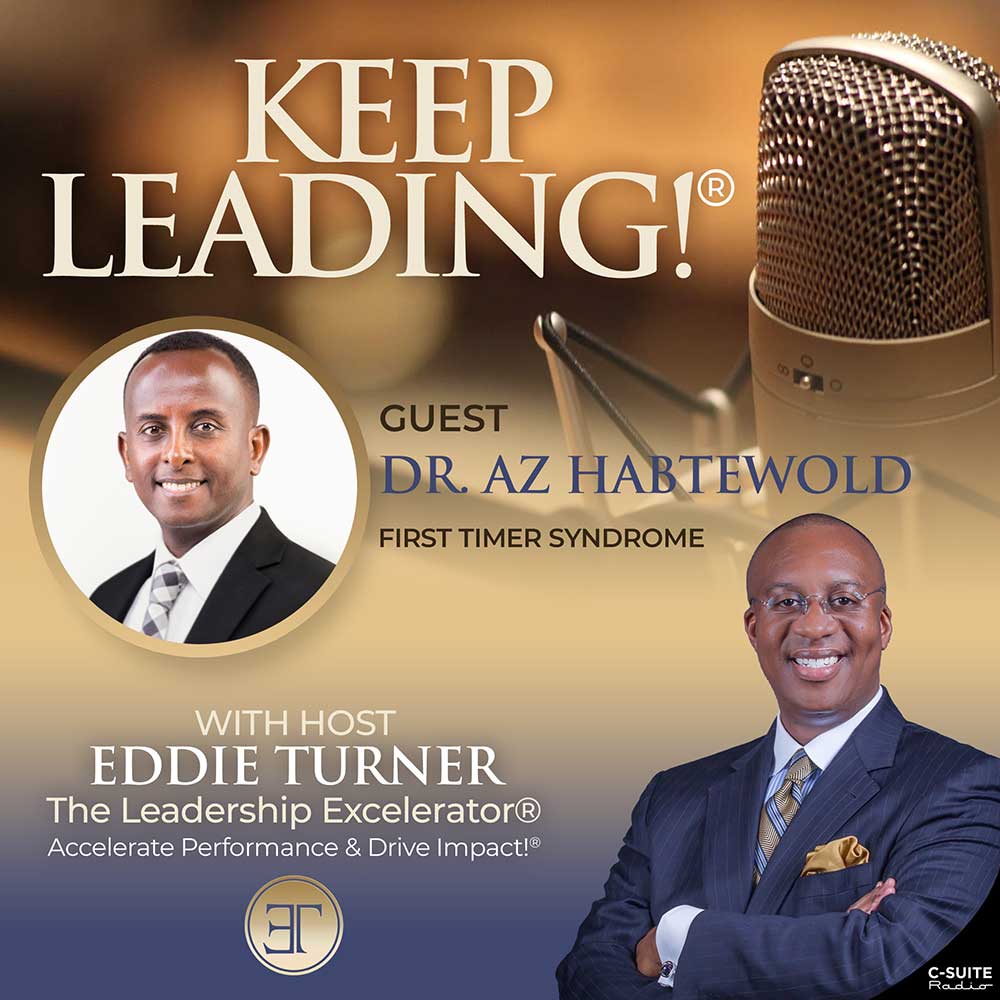
Dr. AZ Habtewold
Leadership Development | Strategy | Growth
First Timer Syndrome
Episode Summary
In this conversation, Dr. AZ Habtewold discusses First Timer Syndrome, highlighting its effects on individuals’ stress levels and overall performance. He emphasizes how stress can undermine leadership abilities, health, relationships, and team productivity.
Keep Leading!® Live
Bio
As a seasoned Author, Coach, Consultant, Facilitator, and Speaker at The A to Z Institute—a comprehensive leadership development platform based in Tampa, Florida—I bring 20+ years of international experience that empowers organizations and leaders to achieve transformative growth.
My work bridges theory and practice by combining dynamic adult learning methodologies with actionable strategies tailored for government agencies, corporations, and community organizations.
Website
https://theatozinstitute.com/
Other Website
https://drazhabtewold.com/
LinkedIn
https://www.linkedin.com/in/drazhabtewold/
Twitter
https://x.com/DrAZHabtewold
Facebook
https://www.facebook.com/azhabtewold
Instagram
https://www.instagram.com/drazhabtewold/
Leadership Quote
“Before you are a leader, success is all about growing yourself. When you become a leader, success is all about growing others.” — Jack Welch
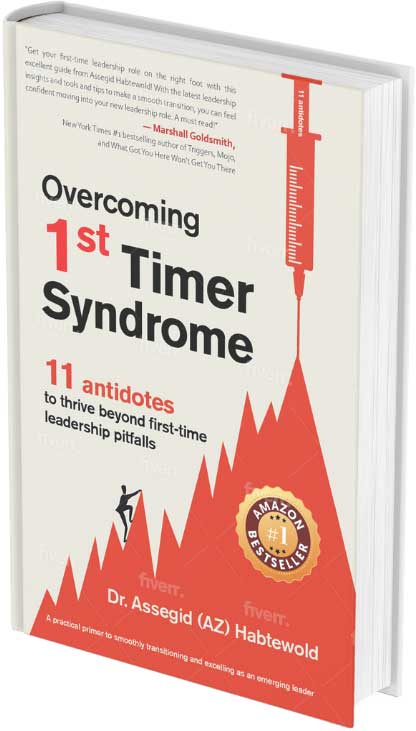
Dr. AZ Habtewold’s Book
Subscribe, share, and review on Apple Podcasts!
https://podcasts.apple.com/us/podcast/keep-leading/id1461490512
Subscribe, share, and review on Spotify
https://open.spotify.com/show/0I7uAW3x4AWsLe6cnAzHp7?si=14549a44dec3495f
Full Episode Transcripts and Detailed Guest Information
www.KeepLeadingPodcast.com
Keep Leading LIVE (Live Recordings of the Keep Leading!® Podcast)
www.KeepLeadingLive.com
Connect with Eddie Turner
Website: https://www.eddieturnerllc.com
LinkedIn: https://www.linkedin.com/in/eddieturner
About the Keep Leading!® Podcast
The Keep Leading!® podcast is designed for individuals passionate about leadership. It focuses on leadership development and insights. Join your host, Eddie Turner, as he engages with accomplished leaders and influential figures from around the world about their journeys to leadership excellence. Listen as they share their leadership strategies, techniques, and insights.
Share the Inspiration
Are you inspired by what you hear? Share the episode with your network to help spread the message of empowerment and leadership. Use the hashtags #KeepLeading and #KeepLeadingPodcast to join the community of listeners dedicated to continuous growth and excellence in leadership.
Transcript
Eddie Turner:
Hello, welcome to the Keep Leading Podcast. The Keep Leading Podcast is dedicated to leadership development and insights. I’m your host, Eddie Turner, the Leadership Accelerator. I work with leaders to accelerate performance and drive impact through the power of executive coaching, masterful facilitation, and professional speaking.
I am broadcasting today on LinkedIn, Facebook, and YouTube. Feel free to share this recording with your community so that they can listen to the excellent advice that my guest today has to say. If you’re not following my guest, please do so now. Look him up on LinkedIn and all of his social channels and get access to his outstanding content.
I want you to stay inspired, stay motivated so you can keep leading. And to that end, today I’m going to cover a subject that I hear very often in my coaching sessions with leaders at all levels. Today we’re going to talk about first timer syndrome. Are you feeling like a fraud in your first leadership role? If so, you are now.
And because so many people have told me they feel that way, I wanted to invite an expert on this subject. He wrote the book. And so Dr. A.Z. Habedwald is here today to talk about how you and I can remove self-doubt and overcome pitfalls that we have in our first-time roles, our first-time experiences, no matter what type of an organization it may be. And if we can remove those doubts,
He guarantees that we will have the antidote to transition to a smooth transition, lead with confidence and thrive beyond the challenges that first time leadership brings. So here with me today is Dr. AZ Hadebold. Dr. AZ, welcome to the Keep Leading Podcast.
Dr. AZ Habtewold:
Thank you very much, Eddie. I’m glad to be here. Thank you for the opportunity. I invited you to my podcast. You gave us so many insights about how to lead in the area of AI. And I’m glad to be back here and have this wonderful conversation about first-timer syndrome so that we could be able to give something to people who are leading for the first time in a row.
Eddie Turner:
Yes, that is true. In fact, I’ve known you for probably 10 years and I quite honestly don’t remember how we first met. Maybe it was an ATD conference or something. But you invited me on your TV show at the time. And at the time you had a TV show that had global distribution, but really major concentration and Africa. I forget how many millions of views that show got. So that was really pretty impressive when I saw that.
Dr. AZ Habtewold:
Yep.
Dr. AZ Habtewold:
Yes.
Dr. AZ Habtewold:
Yep.
Eddie Turner:
And I think I’ve done a couple other things with you over the years. And you’re right. I think it was maybe six months ago I was on your podcast. So we go way back.
Dr. AZ Habtewold:
Yeah, yeah. It was a satellite. Yes, yes. I think we met at ATD and also I believe NSA DC, you came to facilities to speak something. And the TV show that we did was, it was a satellite TV where not only people in the diaspora but also back in Ethiopia and Africa, people watched it.
Eddie Turner:
Okay and I say yeah that would have made sense yes.
Dr. AZ Habtewold:
And people loved watching you sharing the insights, the strategies that you had. And I’m glad that we kept on communicating and inviting one another to our platforms to serve our audience.
Eddie Turner:
Well, thank you, thank you. Well, tell us Dr. Azee, what is first timer syndrome?
Dr. AZ Habtewold:
I want you to go back your first time home buying or car or first time date. Always when it’s first, it’s always stressful. Go back again to buy a car for the second time or home or a date for the second time. Now you better. First timer is always challenging to anyone. Even if, for example, you
where a supervisor, when you become a middle manager, you are a first-time middle leader. Even if you were a middle manager, when you go to executive role, you are still a first-timer. A first-timer syndrome is the symptoms that you demonstrate when you are making a transition from one position to a new leadership position, and it has its own symptom. But this is normal.
what’s very challenging for a lot of people is they don’t know this syndrome exists. That’s the difficulty. Some of the symptoms, they are similar to any other first-timer syndrome, whether when you buy a first-time car, first-time home, whatever first time. When it comes to leadership, the first thing you have is uncertainty. You don’t know what you’re going to deal with because you have never been there.
Eddie Turner:
Well, what are the symptoms that we should be looking for?
Dr. AZ Habtewold:
And the second syndrome that you see is you doubt yourself. You were great. Let’s say you were an A player in the workplace and you succeeded. And there are very strong reasons why you succeeded. One, you made your goals because when you are an employee, you have a goal just for yourself. You made your goals and you had quota or whatever outcomes are expected from you. You made them.
But the moment you come to a new position from a player to first time team leader or project manager or supervisor, now you’re going to doubt yourself. Can I do it? You perform it there, but it’s a different world. Now you are leading other people. Now you make other people accountable and so on. That’s self doubt. Of course, stress, anxiety. Overall, what you see is
When I go out to coach and train first timers, the first thing they tell me is, was this program? Three months ago, two months ago, a year ago. Because when I showed them how to overcome the syndrome, I should have got that long time ago. They have been suffering. Part of the reason why people have these syndromes is because they are just thrown into deep water, hoping that they’re going to swim.
But many people struggle and some of them sink.
Eddie Turner:
So as a result, what are you seeing amongst the people as you did this research in the first 90 days of the role when they’re manifesting these symptoms and just being thrown in? What are you seeing as the results?
Dr. AZ Habtewold:
The results are very, very bad. The statistics actually shows that first timers for the first 18 months, most of them they fail up to 60%. Initially, part of the consequences of first timer syndrome is people are gonna be stressed out and that reflects on their performance.
and the ability to lead others. You can imagine when you are uncertain, doubtful, when you are stressed out, anxious and frustrated, you’re not at your best. And because of that, you lose your health, you’re stressed out, it affects your family, it affects your relationship, it affects the productivity of the team and also the people around you because you are affected and your affection also reflects
on the well-being of your team and that also erodes their confidence on you. They’re not all in, they’re doubting you, decisions are not made quickly. All of this is going to affect the bottom line, not just the team, but the greater organization.
Eddie Turner:
Thank you. And in your book, you wrote about 11 antidotes to thrive in these situations. Can you share with us the two most important that someone might consider of the 11?
Dr. AZ Habtewold:
I would say first of all, there are three areas. I would say these are three, I can put them into three areas. The first one is on yourself and the second one on your skill sets. And the last one is about growing yourself and growing your people. If I have to pick just two, yep.
Eddie Turner:
we can put those in two, right? So owning yourself and your skills and then the second would be
Dr. AZ Habtewold:
Yep.
On the people because at the end of the day, you know when you are just a start employee, if you work on yourself, if you discipline yourself, if you make yourself accountable, you succeed. But once you become a first time supervisor or team leader or project manager, your success is not measured based on your outputs. Your performance is based on the team’s performance and therefore.
If you want to be successful, overcome the first timer syndrome and over deliver and make the people who put you in that position. Wow, we made a right decision when we picked her or picked him. You have to work on yourself and also work on your people from your from your perspective. The most important thing that I would say there are all of them are important, but I think the ability to handle the emotional stress brings in and if you have.
high emotional intelligence. If you know how to overcome stress, if you understand how to channel your emotional stress and understand the emotions of others, you could be able to at least survive that period. The more you work on the other antidotes, you could be able to overcome the first-timer syndrome. From the perspective of the people around you,
You need to know how to grow people, how to coach, how to mentor people. Yes, you are promoted because you were a player. Right now, can you raise other players? This requires you to have the mentality of growing people because when you were an air player, you were just growing yourself. Now at this stage, if you grow, yeah.
Eddie Turner:
But wait a minute, Dr. AZ, wait a minute, wait a minute, wait a minute. Nobody’s gonna do it as well as I can do it. If I want it done right, I gotta do it myself.
Dr. AZ Habtewold:
Yes, that’s one of the challenges that first timers have because you were a player, you were promoted. Actually, let me go back. When you look at how organizations are recruiting first timers, they see them perform well, outperform their peers, and they think that, okay, if they could be able to outperform their teams and over deliver,
If we make them the leader of the team, they could be able to quadruple, even increase productivity exponentially. What they don’t understand is that the psyche that person has when they were employee is totally different when they become a leader. You have to have a different psyche. At this point, it’s not about you. It doesn’t matter how much great you are. You can’t come early. You can go late. You meet your goals.
You can over deliver, but at the end of the day, if you are unable to create people who could duplicate you, even outstrip you, outperform you, you’re not successful.
Eddie Turner:
Excellent. Now, you have an impressive background, not only from your work experience, but your educational experience. Do you have a time in your career, in your journey, where you personally experienced first-timer syndrome?
Dr. AZ Habtewold:
many, many times, even recently. One of the things that I value the most, one of my values is growth, and I want to grow on a daily basis. And the other aspect of growth for me is not to stay in one place forever. After a couple of years, I want to change. I have changed professions. I was a researcher and then a software engineer and then leadership training coach. And then I moved to
commercial real estate business brokerage. And recently I also entered into finance. As you can imagine, every time I move from one position into the other one, I’m a first timer. Yeah, I’m excellent when it comes to my former professional career or leadership position. But when I come to a new profession, a new career, a new position, I’m a first timer. And I have faced this so many times.
I can tell you the recent one when I decided to take license and become a business broker to help small business owners like myself to buy and sell and get capital and transform their startup to scale and grow. I was new. I didn’t know how to handle this because I was new. I had the license, but I didn’t have the knowledge, the experience, and I needed somebody to mentor me.
The feeling I had was like, my gosh, what was I doing? Why did I come here? I felt like I was droning. I felt like this was too much. The people around me, they have track records, they have experience, they have listings, and they have clients, but I was just starting. But I can go back and tell you so many times where I experienced, to connect this with the book.
I believe it was 2013, 14, 15, I used to travel around the country providing workshops on how to excel as a first time supervisor or manager. During that time, we had this one day workshop and people were signing up. I was working with a national training company. I don’t want to mention their names. People pay.
Dr. AZ Habtewold:
Organizations pay for their people. come one day. I saw how much people felt safe. People feel my gosh, we should have this for everybody in our organization. You have to provide this to my team. They were like, my gosh, I should have got this long time ago. And after a while I realized that. There is a gap. There is a gap on leadership transitions.
Eddie Turner:
Mm-hmm.
Dr. AZ Habtewold:
I start to study middle managers also because when you are a supervisor, you are supervising a team. But when you become a middle manager, you are supervising teams, projects, portfolios, and you may be leading a department. And then when you make a transition to an executive role, you’re not just in the middle. You are responsible for the overall vision, mission, culture.
have to go out, build coalitions and so on. And as you can see from one stage of leadership to the next one and to the next one, they’re totally different in terms of the mindset you need, the competencies you need, the character, the personality you need. And then I decided, you know what? I have to invest my time, resource and energy to bridge this gap, the gap of leadership transition. That’s how I wrote the book, Partly Personal Experience, Me Suffering.
Eddie Turner:
All right.
Dr. AZ Habtewold:
as a first timer and then I saw other people suffering. I was not the only one and I said you know what this thing must be addressed. I wrote the book. I have another book coming for first time middle
Eddie Turner:
So you did something as a person who’s an outsider and you wrote a book to address this that people could learn from. But if I’m an insider, if I’m in an organization and I’m watching people struggle with this first-timer syndrome, what should I do?
Dr. AZ Habtewold:
Yes.
Dr. AZ Habtewold:
Many things you could do, first of all, onboarding. When you look at organizations, they have a generic onboarding, which they use for employees. You are just being hired as an employee. They have ABCD kind of onboarding. They use the same kind of onboarding for first timers. And therefore, if you are, for example, a middle manager, you have…
first-timer supervisors, project managers, team leaders, make sure that they have a tailored, customized onboarding targeting these first-time leaders. Another thing you could do is mentoring. In most cases, these leaders who are promoting first-timers, they were there. Somehow they survived. And they think, you know what? I’ll throw them into the deep water.
They will swim. I know they could do it. I have seen them performing outperforming. Rather than doing that, why don’t you be a mentor or find a mentor for them who transitioned successfully so that you could be able to cut some learning curves and you could be able to save them a lot of pain, stress, frustration, anxiety. They could also perform well because you could give them some tips, frameworks.
Steps and so on. The third thing, the third thing I would say, find resources. For example, in my case, when I wrote the book, my thinking was some people may not be able to pay for one day workshop. They may not want to travel or they can’t travel and attend those workshops. Why not just write a book? They can buy the book, $9. They can read it in a week. Now they are more than ready. Or hire a coach like you. You wrote a book on emerging leadership.
they hire you within four, five, six weeks, they could be able to save six years of pain or six months of pain. And therefore they can do at least these three things. Give them a tailored onboarding, give them a mentor, maybe create for them a 30 day or 90 days plan on helping them make a smooth transition and excel at that first time role from the get go. And of course they can hire coaches and.
Dr. AZ Habtewold:
trainers, people like you and I.
Eddie Turner:
Excellent. Well, thank you for sharing that. Now, you’re not just a leadership expert. You, as you alluded to earlier, are also a commercial real estate professional. You’ve got your own business brokerage now. And a lot of people would wonder, as you talked about earlier, you’ve gone from these different areas. What advice do you have for other entrepreneurs and founders or wannabe entrepreneurs and founders
who are leading for the first time in their own ventures.
Dr. AZ Habtewold:
This is very important and I’m glad you brought this and we need to talk about this. First of all, I want to disclaim when it comes to choosing path is personal. There are two school of thoughts. One advises you to become generic like me and another school of thought says you have to be a specialist. I’m sure some people prefer to specialize, but I decided earlier.
I had some influences. There is a book called Range. also, know, Alan West is part of our profession. He’s one of the top consultants. He’s known as the million dollar consultant or something. He’s very, very big in our industry, and he prefers us to be generalists. And because of that, I chose to be a generalist. I just don’t want to pick a lane.
but I want to diversify. That’s safe after disclaiming that because I’m not saying my way is the best way. People could say, you know what, I don’t want to be like Izzy. If I’m a leadership expert, I want to stick with that. If I’m a business broker, I stick with that. In my case, that’s the generalist path I chose. The second thing I would say is when I study the world, especially now, if you just pick one profession,
you may become very liable, become very narrow. Think about, let’s say I’m a lawyer in a specific sector, and let’s say AI took that specific sector in the low field, and then I will be out of work, out of job, out of.
anything because I have to start from scratch. It may take me another 10 years, five years to find another profession. In my case, what I would advise entrepreneurs is unless you are sure that you have a product or service which is highly specialized and no one is producing those products and services, you should have at least multiple.
Dr. AZ Habtewold:
products and services and different layers of offerings. That way, some people may find one of your product services affordable, convenient, and preferable for them. Others would do. But I don’t advise people to just offer one product and one service and specialize, unless they are sure there is no competition. The last thing I want to say is…
Eddie Turner:
Excellent.
Dr. AZ Habtewold:
In terms of whether you are a professional or entrepreneur or leader, what I learned, this is my personal experience, it may not work for other people. What I learned is that when I go out to coach, people feel more comfortable when I answer their questions in other fields. Yes, I’m not a special, for example, let me give you a good example. Last time I met someone and this person, they approached me to coach them and they wanted me to help them speak in front of a camera.
and we had a program. In our discussion, I learned that they are preparing themselves because they want to pitch.
people who are investors and they are trying to raise capital. In that conversation, I immediately expressed to them that I know the people you’re trying to pitch. These are savvy investors. They don’t easily open their pocket and invest on you unless you know how to immerse them, create sense of urgency, and make them to open their wallet.
and invest with you in five, 10 minutes. I mentioned about Shark Tank and so on, and I told them the behaviors and the psyche of investors. And then I talked about how they can package also that pitch because I’m a business broker. And therefore I told them, if you package this, if you get the valuation of your business and create shares and packages in such a way that it’s a no-brainer for these investors. As you can see, they came to me to coach and mentor them to speak in front of a camera.
to speak in front of investors. But I give them more than that. And when I was preparing them and coaching them, I know from where they are coming from, what kind of background, what they have to do. And I helped them to understand the psyche of the audience and how to turn them from just audience in their pitch into investors.
Dr. AZ Habtewold:
I encourage people to diversify their knowledge and expertise, especially now as we are challenged by AI and the world is globalized and we have to over deliver and go the extra mile.
Eddie Turner:
Thank you, Dr. Azee. What’s the most important concept you want people to take away from our conversation today?
Dr. AZ Habtewold:
From our conversation today, if they are professionals, I’m encouraging them to add certain expertise, competencies, if they are entrepreneurs, to diversify their product and services, if they are small business, to scale. Because everything that we’ve been talking about, how do you scale from just being a star employee to the first time supervisor or manager or to media leader or executive? These are the main takeaways.
Eddie Turner:
Good. And what is a quote that you use that helps you to keep leading?
Dr. AZ Habtewold:
There are powerful quotations, but I would mention what I shared yesterday. Yesterday I shared a post on social media, which is about shoot for the moon. Shoot for the moon even if you miss, you’ll land among the stars. This is about me always raising the bar. One of the ways to raise your bar is to take leadership initiatives, to go somewhere and find problems and lead to solve them.
or find some challenges and go out help and lead people to go to the next level. And that quotation, among other quotations, inspires me to keep on leading.
Eddie Turner:
Excellent. And where can people learn more about you?
Dr. AZ Habtewold:
They can find me on social media. I’m available on LinkedIn, Facebook, and also in Instagram. They can find me by seeing, my name is here on the screen, Dr. Az Haptwald. I’m also available on, I have my website. can go to draz.com or they can also email me az at.
www.thea2zinstitute.com. They can also go to the website www.thea2zinstitute.com.
Eddie Turner:
Excellent. Well, thank you for having been a guest and helping us to understand first time syndrome.
Dr. AZ Habtewold:
Thank you, thank you very much, Eddie, for inviting me and giving me the opportunity to explain about first timer syndrome and how to overcome it.
Eddie Turner:
And thank you for listening. That concludes this episode, everyone. I’m Eddie Turner reminding you that leadership is not about our title or our position. Leadership is action. Leadership is an activity. In fact, leadership is not a role we play, it’s who we are. It’s not a garment that we take off and put on. We must be a leader at our core.
and allow it to emanate in all we do. So whatever you’re doing, always keep leading.