
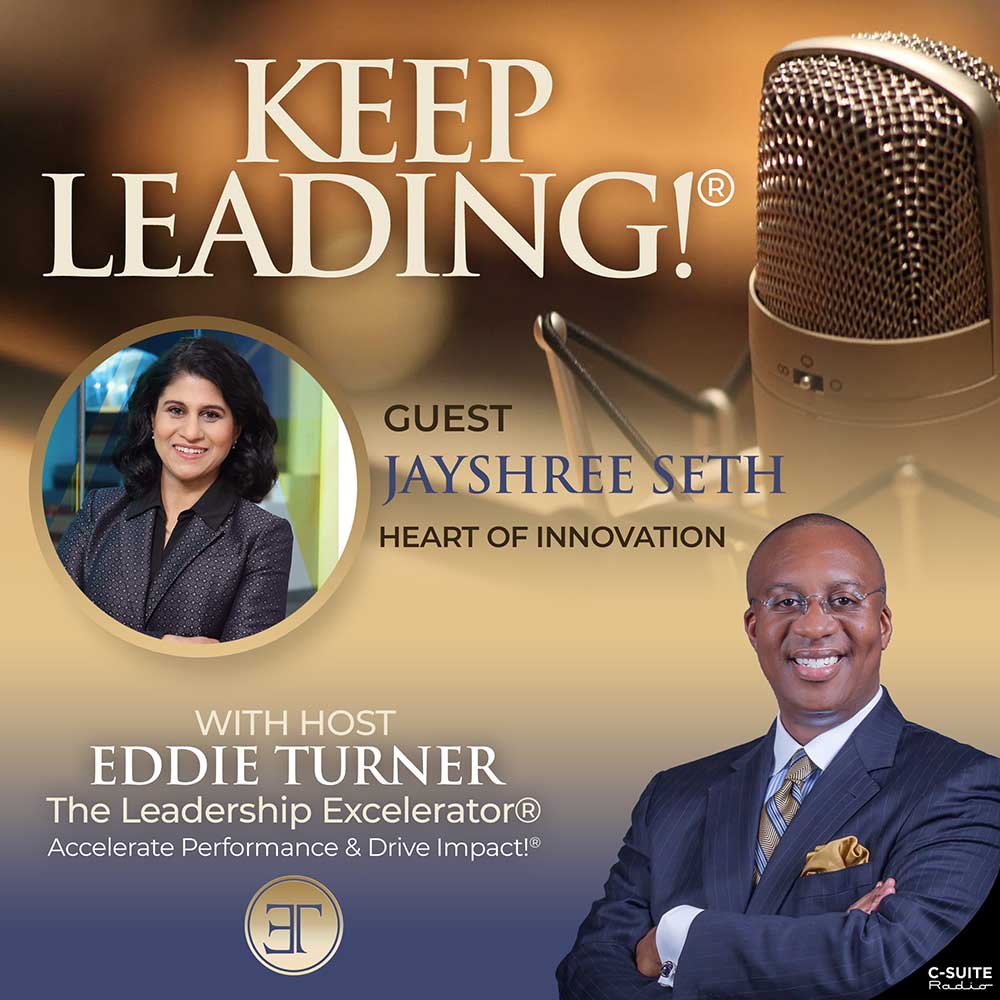
Jayshree Seth
Corporate Scientist and Chief Science Advocate at 3M
Heart of Innovation
Episode Summary
Discover the secrets to leak-proof leadership in this Keep Leading!® podcast episode during my interview with Jayshree Seth, an acclaimed thought leader shaping the future of science and engineering as a Corporate Scientist and Chief Science Advocate at 3M.
Jayshree shared insights on how leaders can navigate today’s challenges by embracing a holistic approach to leadership that integrates vision, values, strategy, and dynamic engagement with people and processes. Listen to uncover the essential tools and strategies for fostering innovation and achieving sustainable organizational success.
Keep Leading!® Live
60 Second Videos
About Jayshree Seth
Jayshree Seth, a Corporate Scientist at 3M, holds 80 patents and joined the company in 1993 after earning her PhD in Chemical Engineering from Clarkson University. In 2018, she became 3M’s first Chief Science Advocate, promoting science and the importance of diversity in STEM to foster innovation. She is a globally recognized speaker and thought leader, featured in media across the globe and received several prestigious awards, including the Society of Women Engineers’ Highest Achievement Award in 2020 and the 2021 Gold Stevie® Award for Female Thought Leaders of the Year.
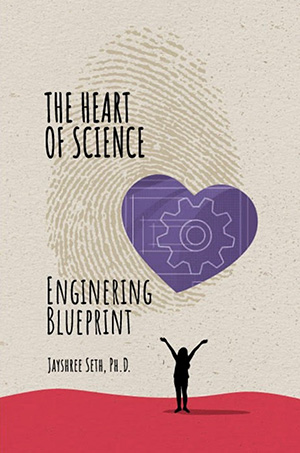
Jayshree is a TEDx speaker and author of two books, with sales proceeds funding scholarships for underrepresented minority women in STEM. She is completing a trilogy with her third book, “Engineering Blueprint.” Jayshree serves on several boards and advisory councils, including the Science Museum of Minnesota, Clarkson University’s Engineering Advisory Council, the AAAS Industry Advisory Council, and the Aspen Institute’s “Our Future is Science” program. She has two adult children, and her husband also works at 3M.
Website
https://youtu.be/IltRfvUx6u8?si=hs-Jr4JpOq4MypxP
Other Website
https://youtu.be/00OXFWU28tA?si=S1C8El1aBLj_-dJV
LinkedIn
https://www.linkedin.com/in/jayshree-seth-6287b45/
Instagram
https://www.instagram.com/sethjayshree/
Jayshree Seth’s Book
https://amzn.to/40sYH0N
Leadership Quote
“Now more than ever before in our lifetime, innovation is a lifesaver for business, inspiration is the lifeblood of innovation, and purpose is the lifeline for inspiration.” – Jayshree Seth
Subscribe, share, and review on Apple Podcasts!
https://podcasts.apple.com/us/podcast/keep-leading/id1461490512
Subscribe, share, and review on Spotify
https://open.spotify.com/show/0I7uAW3x4AWsLe6cnAzHp7?si=14549a44dec3495f
Full Episode Transcripts and Detailed Guest Information
www.KeepLeadingPodcast.com
Keep Leading LIVE (Live Recordings of the Keep Leading!® Podcast)
www.KeepLeadingLive.com
Connect with Eddie Turner
Website: https://www.eddieturnerllc.com
LinkedIn: https://www.linkedin.com/in/eddieturner
Twitter: https://twitter.com/eddieturnerjr
Facebook: https://www.facebook.com/eddieturnerllc
Instagram: https://www.instagram.com/eddieturnerjr/
YouTube: http://www.youtube.com/EddieTurnerJr
LinkedIn Business: https://www.linkedin.com/company/eddie-turner-llc
TikTok: https://www.tiktok.com/@eddieturnerllc
Bluesky: https://bsky.app/profile/eddieturner.bsky.social
Agent: https://gray-miller-agency.webflow.io/roster/eddie-turner
100 Coaches Agency: https://www.100coaches.com/coaches/profiles/eddie-turner/
About the Keep Leading!® Podcast
The Keep Leading!® podcast is for people passionate about leadership. It is dedicated to leadership development and insights. Join your host, Eddie Turner, The Leadership Excelerator®, as he speaks with accomplished leaders and people of influence across the globe about their journeys to leadership excellence. Listen as they share leadership strategies, techniques, and insights.
Share the Inspiration
Inspired by what you hear? Share the episode with your network and help spread the message of empowerment and leadership. Use the hashtag #KeepLeadingPodcast and join the community of listeners who are dedicated to continuous growth and leadership excellence.
Transcript
Eddie Turner:
Hello and welcome to another episode of Keep Leading Live. Keep Leading Live, like the Keep Leading podcast, is dedicated to leadership development and insights. I’m Eddie Turner, the leadership accelerator. I work with leaders to accelerate performance and drive impact through the power of executive coaching, masterful facilitation, and professional keynote speeches.
If you are joining me and my guest today on the three platforms that we’re broadcasting from—LinkedIn, Facebook, and YouTube—let us know that you’re here. Go ahead and drop a comment in the comment section to say hello, ask a question of myself or my guest, and we will be happy to answer your questions. Hit that share button and your colleagues can watch the recording later on in their social media feed.
Now, I am excited to have my guest today. I’ve had a lot of impressive people on the Keep Leading podcast. And I’ve had some scientists and some engineers and inventors, but this is my first female scientist, engineer, and inventor. Others have had patents, but this is the first one to have 80 patents. So I’m really excited to have a woman who is an acclaimed thought leader—I’m so excited, I’m getting tongue twisted. She’s an acclaimed thought leader who is shaping the future of science and engineering as a corporate scientist and chief science advocate at 3M.
My guest today is going to talk to us about the heart of innovation. It is Jayshree Seth. Jayshree is, as I mentioned, a person who holds 80 patents. She’s the corporate scientist and chief science advocate, promoting STEM and fostering innovation at 3M. She has been featured in media all over the globe, a prodigious writer, author, speaker, and she’s received numerous awards for her work. She also has a TED talk that you may want to check out, and she’s the author of three books, which we will discuss as well.
Jayshree, I’m excited to have you here. Welcome.
Jayshree Seth:
Thank you. Thank you for having me, Eddie. I’m excited to be here.
Eddie Turner:
What an honor. Jayshree, tell my audience what I may have missed about you and your amazing background.
Jayshree Seth:
Ah. You didn’t miss a lot, so that’s good. I should mention that when people hear things like chief science advocate and scientist and engineer and inventor, I want to also emphasize the fact that I actually started out thinking that I was not the science type. But I grew up on the campus of an engineering institution. My dad was an engineering professor, and all of us, all kids, were encouraged to get into engineering. And I remember thinking, am I really cut out for that? Because I had the stereotypical image of what those people did and that wasn’t what I wanted to do. I wanted to help people and improve lives and make the world a better place, and I couldn’t see that connection.
But long story short, I did get into engineering and then I did get a summer internship at 3M and that turned into a full-time position and there I was. And that’s when I realized you can help people. You can make the world a better place. You can be inventive, you can be creative. And I want to mention that because I started out not the science type and became the chief science advocate. So strange things like this can happen.
And it is important to understand that I’m the first ever chief science advocate because this role was instituted at 3M when we did a survey to understand the public’s perception of science and the public didn’t really appreciate that the gadgets and devices that they so love, those come from science and the applications thereof. So we wanted to really advocate for science because that is what drives innovation. So I’m excited to be in this role since 2018 and, uh, over 31 years at 3M.
Eddie Turner:
Outstanding. Over 31 years at 3M. Now, that in itself is an accomplishment because most organizations don’t let people stay around that long. So that says a lot about you and about what the value you’re bringing to the organization and it says something about how you feel about the organization you’re working for to even want to stay. So you went from your internship and, uh, 31 years later, you’re still there. Congratulations.
Jayshree Seth:
Thank you.
Eddie Turner:
Now, when we talk about when you talk about not being the science type, that’s where my mind went. My when I met you and started learning about you, because I might hear the word science and, uh, my mind harkens back to all the failed exams and I just didn’t do well in that space. Some areas of that space, on the technology side, I was a little bit better. But yeah, so a lot of people, it’s a—they have to learn how to become that. And for you, you not only became the science type, but your journey has led you to some outstanding work. I mentioned your 80 patents. Can you just give us a high-level view about some of those accomplishments that you have and how they’ve benefited not just 3M, but humanity overall?
Jayshree Seth:
Yeah, so, um, my first project was on, uh, keeping diapers on wiggly babies and it was, uh, pressure sensitive adhesive, sticky tape to keep those diapers on. I had actually never seen a diaper before. I grew up in India and at that time there were no plastic diapers to be seen there. But I did realize that this is a very important invention if there ever was any. And just trying to understand what the end user, which is the baby that can’t tell us anything about the diaper, how do you design for that? So I had this sort of problem solving head that I put on to everything and knowing well that I probably don’t know the area. So because I don’t know the area, I have to develop this rich context about it. And once you have the context, you can understand the content better and then you can come up with concepts.
And so this is what I have done repeatedly in several areas at 3M. So it’s like working in a new area all the time and the excitement of learning about something different and solving problems, collaborating with others to work on them and to launch innovative products. That has really kept me going for 31 years because there’s so many problems to solve and there’s lots of people who can solve problems and few who can identify the problems to solve. So I love doing both of those and it’s been a great journey in a culture of empowerment with an emphasis on collaboration and really a communal context of improving lives. Our brand promise is that our purpose talks about that.
Eddie Turner:
Fascinating. And as a new father who’s changed a lot of diapers over the last four years, I am grateful to you. One other aspect I want to ask you about on that is chief science advocate. Who else has that title in the industry?
Jayshree Seth:
No one. I mean, we looked. There is no one with that title. In fact, this title was covered in the New York Times during the COVID era. And it basically came about because we wanted to understand what the public thinks about science. And, you know, science is central to what we do. It is what drives our innovation. So this is about late 2017 that a survey is done, 14 countries, thousand respondents per country to understand what the public thinks. And when the results came back, it was like, whoa, people said, if science didn’t exist, their lives would be no different. Four out of 10 said that. It was really shocking. But when you dig deeper, you find out that they were taking the survey on their laptops and mobile phones. It’s very clear that science is invisible, it is taken for granted, it is under appreciated. And that’s why we need to advocate for science because we all do understand that we need science to solve a lot of problems.
And this was 2018 when my role was created and we decided to advocate for science. A, about raising the appreciation and awareness and acknowledgement of science in our daily lives. B, about breaking down biases and barriers and boundaries that people see, oh, I’m a girl, I can’t do science or, uh, left brain, right brain or, uh, I’m not a genius, things like that. And then C was about communication, communication, communication with a context that people can see and appreciate. And the reason for all of this was to make people aware how important science is, the role it can play and to attract a whole bunch of people to foster this love for science in the next generation. And then of course, the pandemic happened and people did recognize the importance of science and what it can deliver. So that kind of worked out in a way.
Eddie Turner:
Yes, so you are really, uh, a beacon in your organization, but also someone for people, but especially young women all over the world to look up to and see that they can become, uh, a person who actually practices science and can be innovative and transform lives in the world like you. So we’re very grateful to you, Jayshree.
Now, when it comes to doing just that, your innovation, you talk about the heart of innovation and what that means to organizations. Tell us a little bit more about that.
Jayshree Seth:
Yeah, you know, I’ve been at 3M for 31 years all in innovation, you know, R&D, technology and product development and I have interacted with many different organizations internally and externally, many leaders, you know, I’ve read, I’ve observed, I’ve researched, I’ve experienced. I have peers in other companies. I have lots of mentees internally, externally. And especially through some interesting years given the pandemic and everything that has followed, I keep thinking about what is at the heart of innovation. And again and again the answer is leadership. And leadership is somewhat of an amorphous concept, which you know well as you teach and train and coach leaders. Everyone understands it, but when the word is just thrown around loosely and, you know, people are pulled into so-called leadership positions or when we conflate privilege with performance or a leader really lacks a specific element that is so important in that role, it becomes clear that we need to move from principles to highlighting some very tangible things that people need to have for the kind of leadership that is needed.
And given my unique vantage point of observing it from the trenches and seeing what is it, the kind of leaders that can drive innovation and inspire the next generation of leaders, I wanted to pull something together and I call it leak proof leadership.
Eddie Turner:
Leak proof leadership.
Jayshree Seth:
Yes, so that you have these critical elements, otherwise they will be leak through the gaps in your leadership back. And so let me just rattle off what I think are the important elements. And you will all recognize that when you see somebody who’s engaged, somebody who’s active and somebody who’s knowledgeable, how inspirational that is to drive innovation.
So the first thing is lead. You have to lead with vision, values and strategy. You have to engage with process, people and culture. You have to action, listening, learning and communicating and you have to have the knowledge of content, context and purpose. So those are my 12 gems. And the reason why all of them are there is as you can appreciate, people may have vision, but it’s not aligned with values or they don’t have the strategy on how to make it happen. People may be heavily engaged with process. But what about the people and the culture? Because that is what will help uphold that process. People communicate, but are they listening and learning? And knowledge of content, great, but what about the context in which innovation happens? And what about the purpose that drives the people to be inspired to deliver that? And that’s why it’s L E A K—lead, engage, action and knowledge—and those are the elements. And the good leaders, they recognize the values of all of these and I’ve seen that in action.
Eddie Turner:
Well, thank you for sharing that framework. Is there one step in that framework or one component that’s more important than any others?
Jayshree Seth:
I think they’re all extremely important and the way I look at them is if you’ve got one and you’re working on another and you’re assembling a team that helps you with the third one, great. But you have to have all because you can’t lead with just vision. You need to have values and strategy. You can’t just engage with process. You need to understand people and culture. So all the dimensions are important, but it doesn’t mean that you have to be the expert or the leader or the only person. You can, if you’re a good leader, assemble a team which allows you to reflect on what you may be lacking and have complimentary people to make sure all the dimensions are there so the threads that are weaving across the tapestry of your leadership can stitch together the fabric of that organization and so you don’t have any of these gaps. And I think it’s an important framework. I write a lot about this in my books also.
Eddie Turner:
Wonderful. And I really appreciate how you highlighted that because it is really, really true that leadership is at the heart of innovation, both from an institutional perspective in that you need leaders to understand and you hire brilliant people like you and allow you to innovate, give you the freedom, give you the resources. And in so many cases, individuals report having their innovative spirit stifled, uh, because people are afraid of change. So it’s both from an institutional standpoint, but also from a self-leadership perspective in that people understand need to get out of their rut, don’t be complacent and be willing to explore as you did. And I love the fact that even when you came from an area of the world where this item did not exist, you still said, how can I, as would say, have the growth mindset and the mindset of a child, ask these inquisitive questions to get to that point. Phenomenal. So thank you for sharing that.
Jayshree Seth:
Thank you.
Eddie Turner:
What I’d like to do at this time is just to pause for a brief moment and acknowledge the sponsor of the Keep podcast. If a single employee’s indecision can cost an organization $10,000 to a million dollars, imagine the potential financial impact when more individuals are added to this indecision equation. It can spiral out of control quickly. Decision X is the solution. It’s a bespoke on-demand service designed to help your leaders overcome indecision and move forward with their work. Visit Papion MDC and discover how you can help your team your choice, unstuck, shift perspective and advance today. So Decision X from Papion MDC, uh, the proud sponsors of the Keep Leading podcast for quite a long time. Very grateful to them and their, uh, collaboration.
Now, Jayshree, I want to go back to the point that you made about your books. You’ve written three books in fact, and your books are something pretty special. Tell us about your books.
Jayshree Seth:
Yeah, so the idea of the books came up in 2020, you know, it was a tough year to say the least with the pandemic and the social justice, uh, uprising and, uh, I’m in St. Paul, Minnesota. And we all know what happened in, uh, over the Memorial Day weekend, you know, right in our backyard in Minneapolis and it really gave me the opportunity to reflect and think about my role in all of this, you know, I’m not black, I’m not white, but I’m a highly privileged, uh, South Asian immigrant. Um, and, uh, education is a privilege and the ability to contribute in a productive way, that’s a privilege that I hold. And I was like, what can I do to improve this situation? Uh, and, and why have I not been aware of the systemic issues that are pervasive? And so I read everything that was suggested and I watched the documentaries and all of this and I went through my sort of cycle of grief, despair and then I wanted to be productive with purpose.
So the idea I had was, why don’t I take the essays that I write and we’ll publish a book and all proceeds will go to a scholarship and the scholarship will be for black, Latin or indigenous women in STEM and, and, and we did this with Society of Women Engineers. Shout out to them. And so the book, uh, first book came out and that’s published with SWE, uh, Society of Women Engineers is called SWE. And then I got the opportunity to give the Silas Ethics lecture at Georgia Tech. And you will not believe this, Eddie, out of the hundreds of schools that the first scholar from the sales proceeds of my first book was going, hundreds of schools they could have been going, they were at Georgia Tech, exactly where I was going to give the Silas Ethics lecture. So I got the opportunity to meet this person and I was like, oh my gosh. It was such an emotional experience because we go through our life thinking, oh, one person can’t make a difference, one person can’t make a difference. And I saw how one person could make a difference. I came up with the idea, others joined in, bought the books and here there was a person who was being impacted by this effort.
So in my flight back, I’m writing a second book. I can’t stop here. So two books and we had five scholars. So the first book, Engineering Footprints, Fingerprints and Imprints, it explores like overarching themes of personal development, leadership and making an impact. Engineering Fine Print, the second book, takes us deeper, encouraging us to examine the fine print within ourselves. So that is feelings, identities, needs and experiences, F I N E. I love acronyms if you haven’t figured that out. But this can be a catalyst for purposeful action and self-realization. Then I started getting a lot of requests for workshops to do based on the frameworks and mental models I have in the first two books and that’s why the third book happened. So in this book, I take insights and strategies including those in the first two books and we put them into practice. So it’s actually a hands-on guide. You have suggested reflections, actions you can take, and essentially you can construct a personalized blueprint for success step by step as you embark on this journey of self-discovery and growth. So that one is called Engineering Blueprint and that’s out now. And it’s got over 40 mental models and frameworks.
And the reason, Eddie, why I did this blueprint was I want everyone to have a joyful, purposeful STEM journey and drive innovation. And I mean developing your skills, nurturing your talent, building your expertise and cultivating your mindset and that’s the real STEM, skills, talent, expertise and mindset and that’s it.
Eddie Turner:
Oh, I see what you did there. That’s a big—that’s a twist on the acronym for STEM.
Jayshree Seth:
That’s the heart of innovation, skills, talent, expertise and mindset. And all the books are available on Amazon. So please buy them, support the books and the cause and it’s not just what you take away from them, it’s also what you give. It’s the gift of education, the best gift you can ever give.
Eddie Turner:
Well, congratulations on being the author of three books and even more so on your purpose and how you’re giving the proceeds to benefit, uh, STEM and you partner with the engineering association that supports STEM. And can you just share for our listeners who may not be aware the power and importance of supporting women in STEM?
Jayshree Seth:
We need all the diversity we can muster for the problems that are ahead of us. We need everybody to take a part in solving these problems creatively, innovatively. So considering the under representation of women in STEM fields, it’s a big challenge. We need to make sure that if you’re 50% of the population, you’re close to that for being represented in STEM fields. So it’s extremely important for the future of innovation to have diversity in STEM and especially women and under represented minorities because that makes a huge difference. So we, in fact at 3M, created this docu series and you can see this behind me. It’s called Not the Science Type and it portrays the journey of four women and it shows that it doesn’t matter what your race, gender, ethnicity is, you know, science needs you and science needs you to be you.
Eddie Turner:
Beautiful. And so many people need to see this to be able to believe it. So I’m excited to see that. So, uh, wonderful to hear that. Another point I want to share is, uh, I want you to highlight for me if you would please because folks may be listening to our conversation and thinking, hey, well listen, I’m not a science person, uh, I’m not very innovative, you know, why should this matter to me if I’m not in engineering? If I’m just in the marketing department or if I’m in the sales department, why should the heart of innovation matter?
Jayshree Seth:
Innovation is the only option. Just look around, just look around and see in every arena, we need innovation. And I’m not just talking product innovation. We need innovative ideas. We need innovative mindset. We need innovative thinking. And that’s why it matters to everybody. We need to find new ways of thinking and being. And with all the challenges ahead of us, it is important that we all consider ourselves innovative and we all practice that muscle to think differently. And that’s important because you can think differently and you can also develop the understanding and patience and the open mindedness when others think differently. But without that, we are going to be in a whole lot of hurt. So this is important to everybody. Innovation is really the key to a sustainable future.
Eddie Turner:
Excellent. Thank you. And I appreciate, uh, joining us from LinkedIn is Ezra Miller, joining us all the way from Turkey. And she says that was a beautiful question. So thank you for your feedback. And I appreciate your answer, Jayshree, because yes, we all must challenge ourselves to think differently. No matter what department of an organization we’re in, we have the ability to think differently, do differently and act differently. So wonderful. Thank you for that advice. You have and thank you Ezra for tuning in and not just listening, but asking, uh, giving us some feedback. We appreciate you.
Jayshree, you’ve had an opportunity to collaborate with some of the biggest thought leaders in the world. You’re a tremendous thought leader in your own right, of course, but you’ve, uh, collaborated with Dr. Amy Edmondson, Dr. Rita McGrath and, uh, Tony Martinetti. These folks have helped you to bring this framework to life. Tell us a little bit about what that’s been like to work with such great people.
Jayshree Seth:
Oh my gosh. It’s been amazing. My thought leadership journey started recently, fairly recently, but I was able to really put together what I observe, what I think should happen, what can happen and create these frameworks. And it was amazing to have the likes of the names you mentioned actually acknowledge. It was validation and I share this not to brag, but to let others know that sometimes we just take our ideas and count them off and really don’t think they are anything important. Not true. So these little frameworks that I’ve created have are so meaningful that Professor Amy Edmondson and I wrote an article together for Fast Company, same with Professor Rita McGrath and these are about topics that are so relevant and so important and it tightly puts them together in a framework. So it’s been an amazing journey and I have to say I am so impressed and thankful and grateful to these people who are so famous and so established and yet they agreed to partner with somebody like me who was bringing all these ideas, uh, you know, from a very science and innovation perspective. So it’s been amazing. Truly amazing and I’m thankful for that.
In fact, I was just telling someone last year it was incredible that I got to, uh, go to the White House. I got to, uh, speak at the Innovation Roundtable. I was invited to speak at the Drucker Forum where I met Professor Amy Edmondson in person for the first time and so I feel blessed in this. So I would say if anybody wants to be a thought leader and really authentically put on paper what they believe can happen, should happen, are improvement opportunities, etc, go for it because that’s been my experience.
Eddie Turner:
Phenomenal. Congratulations. That is simply wonderful.
Jayshree Seth:
Thank you.
Eddie Turner:
Well, I want to welcome into our conversation another, uh, person joining us from LinkedIn, uh, Jessica Adams. Thank you, Miss Jessica Adams for joining us and sharing your reaction to our conversation. Jessica says it matters and that’s, uh, no doubt about the question I asked about innovation being important for everybody. It matters because when seat belts were first developed by teams lacking diverse representation, they were designed with men in mind and initially they caused harm to women and children. Even if we’re not in technology, ensuring diverse perspectives on innovation teams is crucial as it directly impacts the safety and well-being of your family.
Jayshree Seth:
Spot on, spot on, spot on. And I have experienced this in my own journey when I look at a product that we’re developing and the perspective that I bring and the perspective someone else brings and how much it enriches what the final innovation ends up being.
Eddie Turner:
Beautiful. Thank you for, uh, for adding to that and no doubt your work is contributing to making the change. And this is something that we would not necessarily have thought about. So Jessica, really, really appreciate that contribution. And again, I appreciate Ezra’s contribution as well. She joins regularly, so that’s why I know she’s joining us from Turkey. I’m always grateful to see her, but certainly grateful as well here at Jessica.
All right, well, uh, as we reflect on what we’ve been talking about and I could talk to you for another hour, Jayshree, but what is the most important message you would like to leave our listeners with?
Jayshree Seth:
Well, since we are on the Keep Leading podcast, Eddie, I would say now is a great time to take those playbooks and turn them into workbooks and write chapters on leadership and legacy in organizations of allyship and advocacy across the value chain, uh, partnership and primacy of the public and stewardship and diplomacy within the ecosystem. Those are the kinds of things that are truly going to drive innovation. So get the pen and paper ready and write those chapters.
Eddie Turner:
Fantastic. And since this is the Keep Leading podcast, I always ask, what is the quote that you use or the best piece of leadership advice you’ve ever heard that helps you keep leading?
Jayshree Seth:
Can I give my own quote? I know it sounds so bad, but I want to talk about—
Eddie Turner:
No, it does not sound bad. You absolutely, you are a thought leader on 80 patents. I want to hear what you have to say.
Jayshree Seth:
Okay, so I have this emblazoned everywhere including on my link and it basically says, now more than ever before in our lifetime, innovation is a lifesaver for business, inspiration is the lifeblood of innovation and purpose is the lifeline for inspiration. And those are the words that keep me going. We need innovation. It’s the only option. We need inspiration because without that, innovation can’t happen and we need a purpose to drive that inspiration. And I talk about that in my TEDx talk as well and I think it’s so important.
Eddie Turner:
Wonderful. So we’ll remind folks again to look for you on TEDx to be able to hear your TED talk as well as, uh, following you on LinkedIn. Uh, is there any other—oh, let me pause for one second. I just have another comment coming here. Uh, Ezra is commenting again for us, Ezra Miller, we appreciate you. She said reminds me of the standpoint theory when you were talking about including women in innovation. Thank you, Ezra. Any comment on that, Jayshree?
Jayshree Seth:
Yeah, I think it defies logic, uh, the percentage of women that are there in the world and the percentage that are in some of the STEM fields. It just defies logic and it’s just a simple problem of under representation and bias and, uh, the answers don’t have to be complex. We just have to fix it.
Eddie Turner:
We just have to fix it. Where can people learn more about you?
Jayshree Seth:
Um, I’m on LinkedIn a lot. So follow me on LinkedIn. Um, that would be great. And if things resonate, please, uh, comment and share and spread the word. And my books really talk about the entire journey I’ve been through, uh, talks through, you know, anecdotes, leadership experiences and, um, you know, ideas for the future. So please, uh, buy the books. Uh, they’re all on Amazon and don’t forget to give a five star review. It helps us to spread the word. It’s all for a good cause.
Eddie Turner:
Indeed, indeed. Well, it’s been such an honor to have you. Thank you again for being a guest here on the Keep Leading podcast.
Jayshree Seth:
Thank you, Eddie. I appreciate it.
Eddie Turner:
And thank you for listening. That concludes this episode of the Keep Leading podcast, Keep Leading Live here on LinkedIn, ladies and gentlemen. I’m Eddie Turner, the leadership accelerator, reminding you that leadership is not about our position or our title. Leadership is an activity. Leadership is action. It’s not the case of once a leader, always a leader. It’s not a garment that we can put on and take off. We must be a leader at our core and allow it to emanate in all we do. So whatever you’re doing, always keep leading.